Article
From outages to autonomy: The future of system reliability with AI-powered auto-healing
Many care delivery organizations and clinical teams rely on cloud platforms to host applications that power scheduling, documentation, reporting and other critical functions.
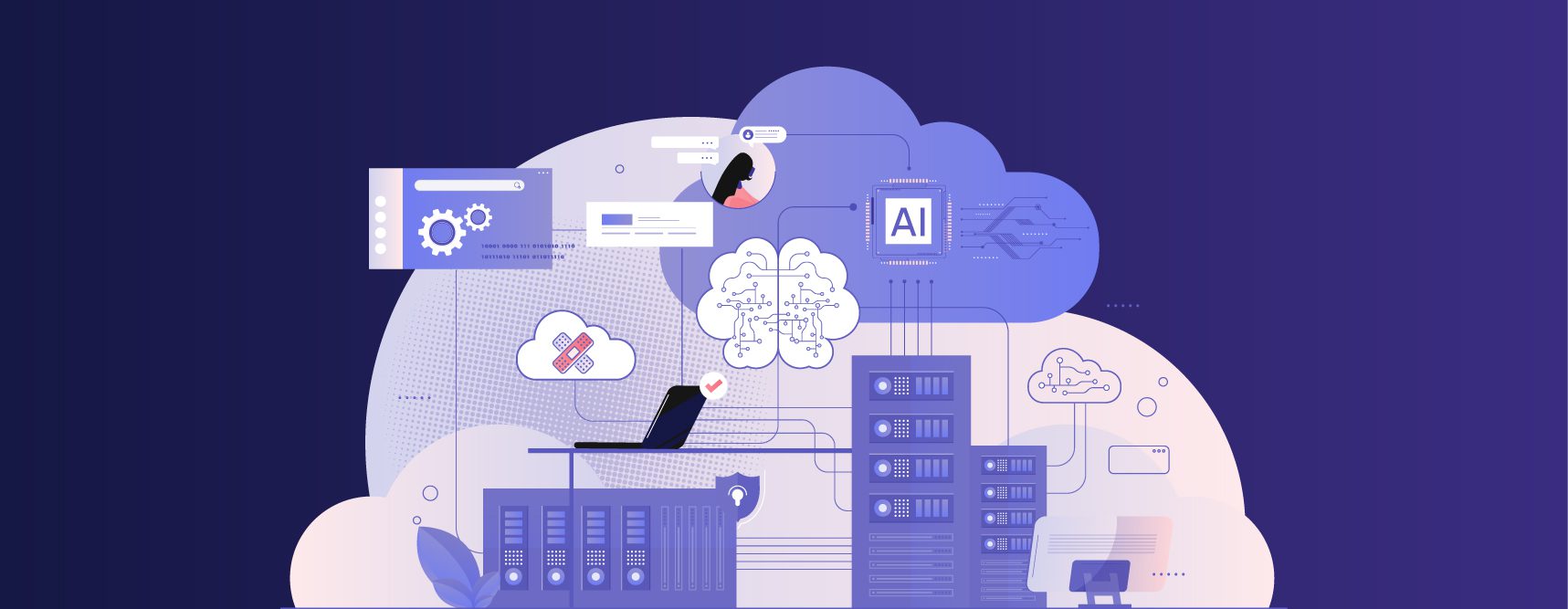
Providers, clinicians, administrators and care teams depend on these systems to work seamlessly and support the best possible patient care. This is where AI-powered auto-healing steps in. An auto-healing, or “self-healing”, cloud infrastructure is an AI-driven system that detects, diagnoses, and automatically resolves issues in real time, ensuring uptime and performance without human intervention. With tools like auto-healing built into cloud-hosted systems, issues can be resolved quickly and quietly, without delays or disruptions, often before the team even knows there was a problem. Many issues arise when organizations don’t have an IT partner managing this behind-the-scenes work that enables healthcare providers to focus on their patients.
An auto-healing, or “self-healing”, cloud infrastructure is an AI-driven system that detects, diagnoses, and automatically resolves issues in real time, ensuring uptime and performance without human intervention.
The challenge with manual incident resolution
 Typical incident resolutions depend on teams manually logging in and searching for the source of an issue, which creates major delays. These delays not only impact care teams and providers but ultimately affect patient care. Without AI-powered auto-healing, incident responses rely on manual steps after detection, creating inconsistency and lag in resolution times. This manual approach also consumes valuable operation capacity that could instead be focused on prevention and optimization. When issues arise, they must be addressed quickly and efficiently, ideally without the care team ever knowing there was a problem. A system that operates quietly and reliably in the background helps teams stay focused on care, not IT concerns.
Real-time recovery through AI integration
An AI-powered auto-healing capability, tightly integrated with monitoring and management system, transforms detection-to-recovery into a real-time, closed-loop process. This avoids disruptions and delays, resolving problems before they can impact users. Additionally, successful auto-healing also requires thoughtful planning, testing and supervision. These capabilities depend on careful controls such as authorization profiles with least-privileged access to ensure automation operates safely and effectively without unintended impact. Implementing AI-powered auto-healing has reduced incident impact from 30–40 minutes to mere minutes for healthcare providers on Altera Cloud. The initiative has also eliminated app restarts and now automates 600–700 recoveries per month—saving 15–20 minutes of manual effort each time. With a system designed for healthcare organizations, auto-healing ensures care teams never have to worry about system failures or IT slowdowns.
“Over the past few months, we’ve gone to virtually 0 scenarios where we’ve had to manually restart app pools… That has allowed us to improve the availability of the systems.”
Mark Nordberg
R&D Leader, Altera Cloud
Empowering healthcare organizations with AI-automation
By automating detection, correlation and recovery, Altera Cloud has reduced disruption for healthcare organizations, supporting patient care. Through our commitment and investment in AI, we’ve minimized disruption for clinicians and enabled faster recoveries, creating a more resilient and confident cloud experience for healthcare providers. With secure, proactive monitoring and rapid recovery, healthcare organizations can rest easy knowing Altera Cloud has their back.
About the author