
Article
When Emergency Department revenue slips: The overlooked threat undermining hospitals’ financial health
When inefficient charge coding threatens hospital success
Many healthcare systems face an impossible balancing act: maintaining financial stability while delivering exceptional patient care. Hospital leaders do everything they can to remain financially stable so they can continue serving their communities and delivering high‑quality care. But when margins tighten, even aggressive savings plans and cost‑cutting measures often aren’t enough to keep the organization afloat. At the heart of this challenge lies a relatively small but still critical process—optimizing emergency department charge coding. While almost all hospitals are using electronic EHR and rev cycle systems, in between these two sits the often completely manual process used to generate charges for ambulatory patients – emergency department and observation status.
The hidden crisis behind hospital doors
Every ER visit generates a complex web of services requiring precise documentation based on the care patients receive. From labs and X-rays to surgical procedures, each patient encounter must be charge coded accurately to ensure proper reimbursement. Yet many hospitals still rely on outdated paper-based systems that create costly inefficiencies.
Consider the reality – manual processes delay billing: A typical mid-sized hospital averaging 35 ER visits daily can quickly accumulate thousand-visit backlogs when using inefficient, manual coding processes. This translates to nearly a month of delayed billing—a financial hemorrhage that threatens organizational stability.
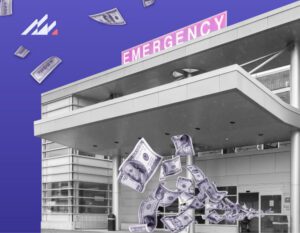
The domino effect of charge coding failures
Inefficient, manual coding systems create cascading problems:
- Revenue loss: Conservative charge coding and human error leave millions in revenue uncaptured annually
- Staffing strain: Hospitals hire additional coders just to stay afloat, draining resources from patient care
- Operational paralysis: 29-day billing delays cripple cash flow and force difficult decisions
The cruel irony? When hospitals respond with cost-containment measures—cutting amenities, considering price increases, or worse, reducing services, these Band-Aid solutions betray the fundamental mission of healthcare while failing to address the root cause.
Breaking the cycle
Modern charge coding solutions offer a lifeline. Automated, grid-based systems eliminate manual inefficiencies, defend coding decisions, and capture legitimate revenue without raising patient prices. This structured coding hierarchy includes complete patient records for the whole coding picture, eliminating the need for manual charge sheets and pulls necessary documentation into the charge rules engine to assign proper codes. Hospitals are not only able to save staff and resources but find money that was there all along.
Columbus Community Hospital discovered this firsthand. After implementing an intelligent coding solution, CCH recovered $8.1 million—nearly half from ER coding alone—without changing prices. The hospital’s 1,000-visit backlog disappeared, staff refocused on patient care, and the hospital secured funding for a new cancer center.
The lesson is clear: protecting coding integrity protects patient care. Read more about CCH’s partnership with Ventus Intelligent Coding here.
About the author