Article
Beyond the EHR: Applying proven cloud operations across the healthcare ecosystem
For years, healthcare cloud strategy has focused on a single, mission-critical system: The electronic health record (EMR). And understandably so. When the EMR is unavailable, the impact is immediate and visible.
But healthcare organizations don’t run on a single system. Care delivery relies on a broader ecosystem—clinical documentation tools, revenue cycle platforms, HR systems and a growing number of integrated applications. When any one of these systems slows down or fails, the disruption is just as real. Clinicians feel it. Operations feel it. Patients ultimately feel it.
The challenge is not awareness, it’s consistency.
Most organizations recognize this. In many environments, the EMR is engineered with a level of rigor that reflects its importance: Strong security controls, disciplined operations and constant monitoring. Outside of that core system, however, the approach is often less uniform. Different tools, different processes and different levels of oversight create variability that introduces risk over time.
That gap is where operational friction tends to live.
With Altera Cloud, the perspective is straightforward: The same operational discipline required to run a mission-critical, highly regulated EMR environment should extend across the entire healthcare ecosystem.
This isn’t about expanding scope for the sake of it. It’s about applying a proven operating model more consistently. The same practices that ensure EMR stability—continuous monitoring, structured patching and backup processes, dedicated operational coverage and deeply embedded security controls—are equally effective when applied to the surrounding systems that support care delivery.
When that consistency is in place, the impact is tangible. Systems perform more reliably. Issues are identified and resolved faster. Security posture strengthens. And just as important, variability is reduced, creating a more predictable operating environment for IT teams and clinical users.
For many organizations, the limiting factor isn’t intent. It’s capacity.
Healthcare IT teams are balancing day-to-day operational demands with broader transformation initiatives. At the same time, the underlying complexity of infrastructure continues to increase. Certificate lifecycles are shortening. Patching cycles are accelerating. Security expectations are rising. What were once periodic tasks now require continuous attention.
In practice, this often leads to a patchwork of responsibilities like critical activities tracked manually, distributed across teams or managed as a fraction of someone’s role. It works, until it doesn’t.
A more sustainable approach is to treat infrastructure operations as a discipline in its own right, one that benefits from dedicated focus, repeatable processes and continuous refinement. When those elements are in place, organizations don’t just reduce risk; they gain back time and attention.
That shift has a direct impact on executive and operational priorities.
For CIOs, it means moving away from managing individual systems toward ensuring the resilience and performance of the entire environment. It creates a foundation where infrastructure is no longer a constraint, but an enabler.
For operational leaders, it reduces the day-to-day friction. Fewer unexpected issues. Faster resolution when something does arise. More time spent improving workflows and supporting users, rather than reacting to system instability.
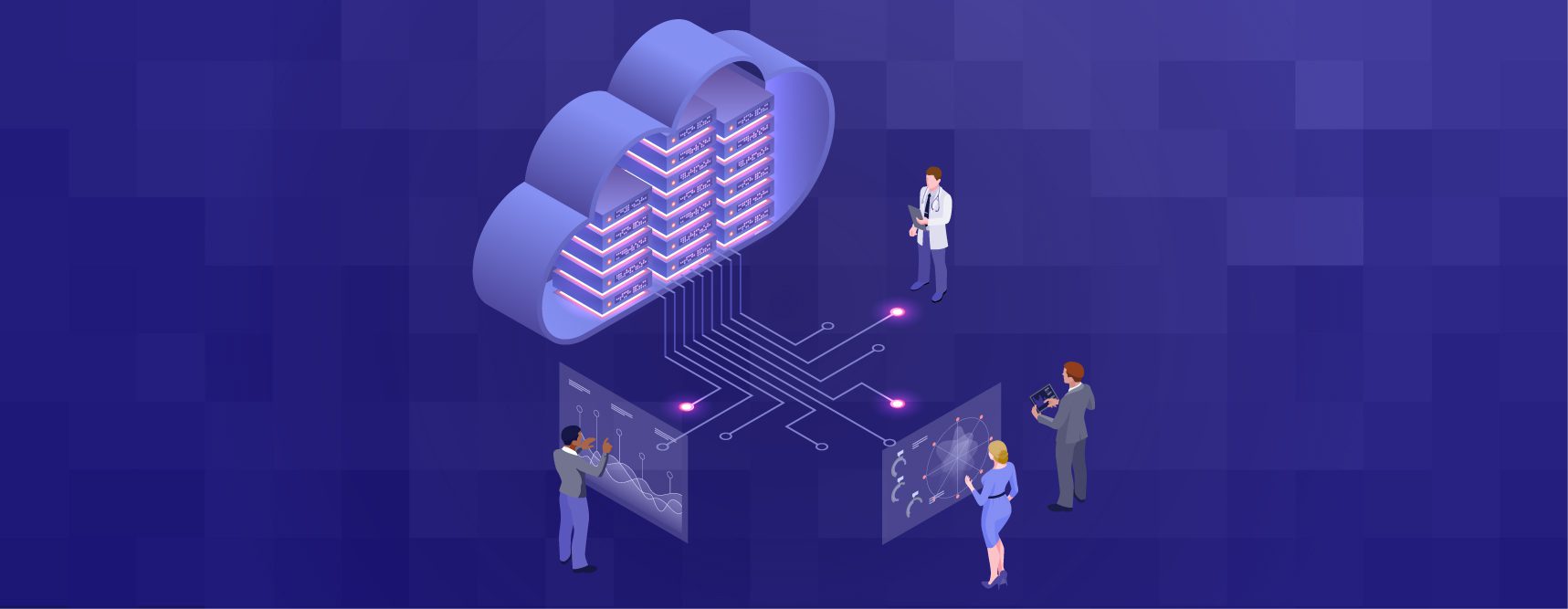
There’s also a structural advantage when systems that depend on each other are managed together. When applications that are tightly integrated are also hosted and operated within the same model, performance improves, troubleshooting becomes more coordinated and changes can be made with greater confidence. The environment starts to behave as a cohesive system rather than a collection of individual components.
This becomes increasingly important as healthcare organizations continue to evolve. New applications are introduced. Integrations deepen. Data volumes grow. The environment becomes more interconnected, and in turn, more sensitive to inconsistency.
The organizations that can navigate this successfully will bring the same level of discipline to everything around the EMR as they do to the EMR itself.
That’s ultimately where Altera Cloud focuses, applying the experience of running mission-critical, highly regulated systems to the broader healthcare ecosystem. Not as a new concept, but as a natural extension of what it takes to operate reliably at scale.
Because in healthcare, it’s never just one system that matters. It’s how all of them perform together.
Learn more about Altera Cloud.
About the author