
Article
Staying aware 365 days a year: The importance of clinical risk evaluation
* This content was originally published prior to N. Harris Computer Corporation’s 2022 acquisition of the Allscripts Hospital and Large Physician Practice business segment. Our business is now known as Altera Digital Health.
Editor’s note: This is part four of an ongoing 2021 blog series focused on patient safety.
Last week, Allscripts published a series of blogs highlighting the key components of the Allscripts Patient Safety Program. Previously, I discussed clinical risk identification and analysis, which is the initial stage of the clinical risk assessment process. In this next installment, we will examine clinical risk evaluation.
As noted in the figure below, clinical risk evaluation is the final component of overall clinical risk assessment. After clinical risk factors are identified in the field or internally identified—and the identified risks have undergone initial analysis to better understand the potential hazard—a critical next step is to formally evaluate the risk in a comprehensive, structured manner.
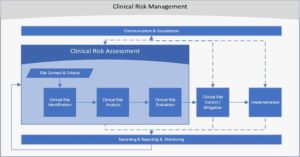
Figure 1: Allscripts Clinical Risk Management Process Flow
In its simplest form, clinical risk evaluation involves formally scoring the clinical risk of a potential safety hazard. That said, it is key to evaluate not only the current risk, but the residual risk after any applicable remediation (short-term fixes), and the residual risk after any applicable resolution (longer-term fixes, typically code changes). For example, a hazard might be initially evaluated to have a “High Risk,” but after doing a workaround, such as adjusting a configuration parameter, it may be reduced to a “Moderate Risk.” Evaluation of planned fixes to provide additional hard controls might further reduce the risk to “Extremely Low Risk.” If the risk reductions at any point were not sufficient, that would be an indication to try to identify more effective controls.
Evaluating the current risk helps drive overall prioritization and can be used to drive clinical risk controls or mitigation activities based on previously agreed criteria related to the acceptability of risk (the “Risk Context” as noted in Figure 1).
The secondary clinical risk evaluation, regarding the after applicable remediation, is important in ensuring that the proposed remediation is sufficient to reduce the risk to acceptable levels (and if not, to drive identification of additional or more effective remediation). This logic is also applied to the tertiary clinical risk evaluation (residual risk after any proposed updates or fixes). If either the secondary or tertiary evaluations do not drive sufficient reduction, this is an indication that more substantive controls are needed.
This formal focus on evaluating the remediation and resolution controls also helps drive more thorough validation of the controls themselves. For example, any control that involves action(s) by clinical user(s) to enable the mitigation benefits can be targeted for usability assessments.
This comprehensive systems-based evaluation is just one component of the overall approach Allscripts takes to managing clinical risk and improving the safety and safe use of our healthcare IT products and services.
About the author

Related Insights












Article