Article
Navigating healthcare data through QHIN connectivity: A smarter approach to patient information
When the HITECH Act was first passed in 2009, the result was a great sense of optimism. People predicted the creation of a healthcare system in which all patient information was digitized, easily transmitted between providers and accessible by the patients themselves. We have now reached that state in most care environments across the United States, presenting incredible opportunity for improved patient care and greater efficiencies, but it also means it is increasingly important for organizations across every healthcare discipline to gather and make sense of all of this critical data.
QHINs at a glance
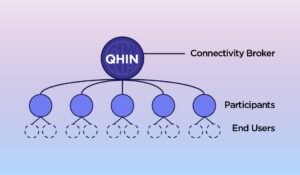 A Qualified Health Information Network (QHIN) is a key component of the Trusted Exchange Framework and Common Agreement (TEFCA). The goal of these networks is to support a nationwide system for safe and seamless sharing of healthcare information, connecting the numerous local, regional and federal health information exchange networks that already exist and securely share healthcare data.
The challenges we’re addressing
It’s well-recognized that today’s healthcare organizations still face critical challenges accessing and managing patients’ health information, despite or maybe even in part because of the ubiquity of health data: fragmented patient data and time-consuming data retrieval and reconciliation efforts. Organizations usually exchange data with others using multiple EHR vendors, public health organizations, and payers, but those are all stakeholders connected to the TEFCA effort through different QHINs. QHIN connectivity offers clinicians significantly expanded access to patient data from those many sources, helping to reduce data silos by instead maximizing the multi-hub model that connects different data sources together. offering patients and healthcare providers greater access to clean data and important information across different doctors and health systems.
QHIN connectivity offers clinicians significantly expanded access to patient data from those many sources, helping to reduce data silos by instead maximizing the multi-hub model that connects different data sources together.
The outcomes that matter
At Altera, we understand that data overload is overwhelming. That’s why we’re committed to delivering clean and reliable data in a way that’s easy to use. Through Sunrise Axon, organizations can filter through the noise and put that data to use in ways that matter: efficient, accurate patient care coordination, improved patient safety through a reduction in errors, decreased unnecessary duplicate tests, minimized implementation costs and more user-friendly workflows that benefit from the availability of the right data at the right time.
About the author